At the start of their fieldwork in September 2026, the second cohort of doctoral researchers of the Research Training Group GRK 2833 “East Asian Futures”, along with their supervisors and postdoctoral researchers, travelled to the RTG’s two partner universities in South Korea. To facilitate scholarly exchange, discussions of issues of common interest, and the discovery of new perspectives for cooperation, as well as to enable personal interaction with students and faculty of the partner institutions, two workshops were held: the first at Sungkyunkwan University and the second at the Asia Center of Seoul National University.
On the invitation of the Department of Korean Language and Literature and the Academy of East Asian Studies at Sungkyunkwan University, the RTG researchers specialising in the humanities had the honour of presenting their research on East Asian visions of the future at this historic institution, one of the oldest existing institution of higher learning. Under the capable organisation of HWANG Ho-duk (Professor of Modern Criticism and Director of the Academy of East Asian Studies) and KIM Kang-eun (Research Professor), two intensive days of workshops took place on September 14 and 15, comprising panels for the doctoral researchers, postdocs and supervising professors of the RTG, as well as Sungkyunkwan University faculty members and their doctoral and graduate researchers. The event poster and the book of abstracts can be downloaded here and here, respectively.
On September 14, Professor PARK Jin-young, the Department Chair, cordially welcomed the audience at the conference venue, the International Building of Sungkyunkwan University. The RTG’s speaker Professor Christine MOLL-MURATA then thanked the organisers for their efficient preparation of the event.
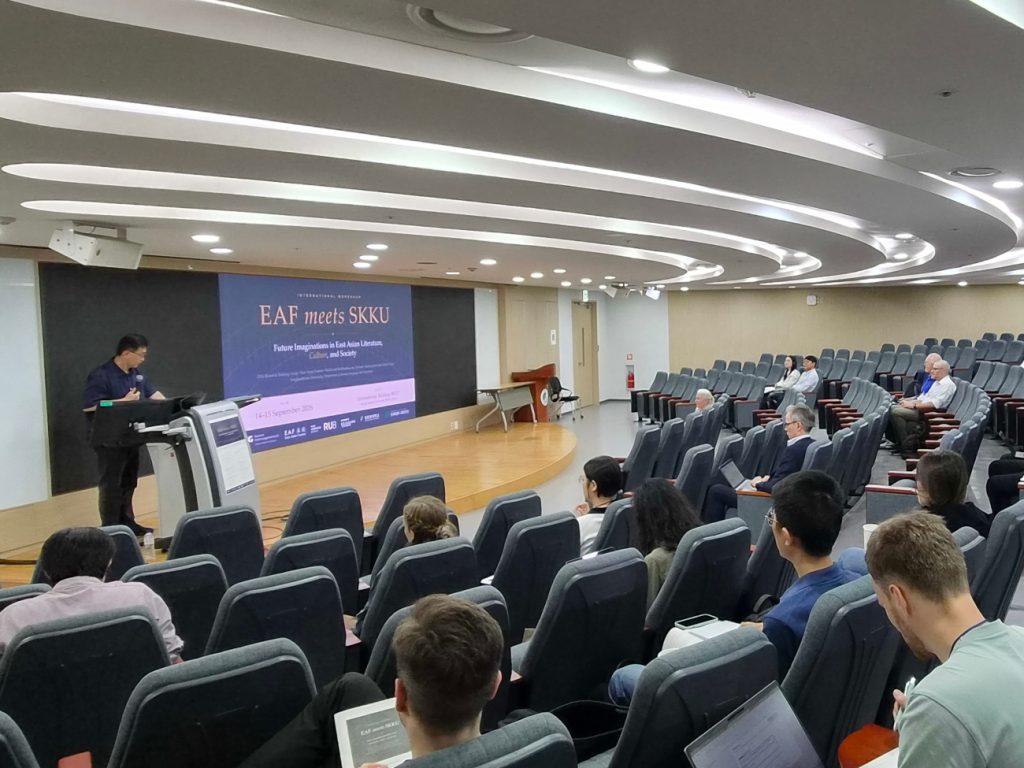
The first panel began with presentations by RTG doctoral researchers HAN Seoyeon, KOBAYASHI Hirotaka, and Lea WALLRAFF. This was followed by a panel for RTG postdoctoral researchers Dr. Martin GEHLMANN, Dr. HINO Aya and Dr. PENG Qinqin. After enjoying a delicious lunch at a restaurant off campus, Professor HWANG and Dr. GEHLMANN led a tour through Sungkyunkwan historical campus, introducing the history of the venerable Confucian temple, Daeseongjeon (大成殿), which houses the spirit tablets of Confucius and his disciples, as well as the lecture hall, Myeongnyundang (明倫堂), and the ancient student dormitories, Dongjae (東齋) and Seojae (西齋). A commemorative group picture was taken in front of the hallmark of Sungkyunkwan, two giant ginkgo trees.
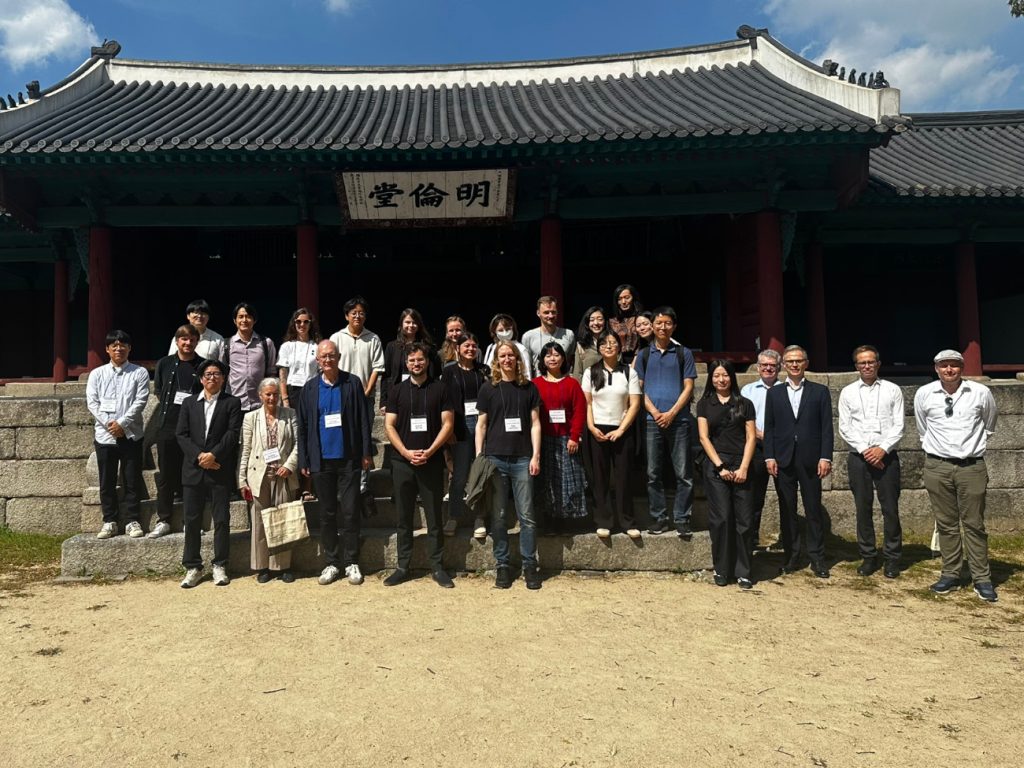
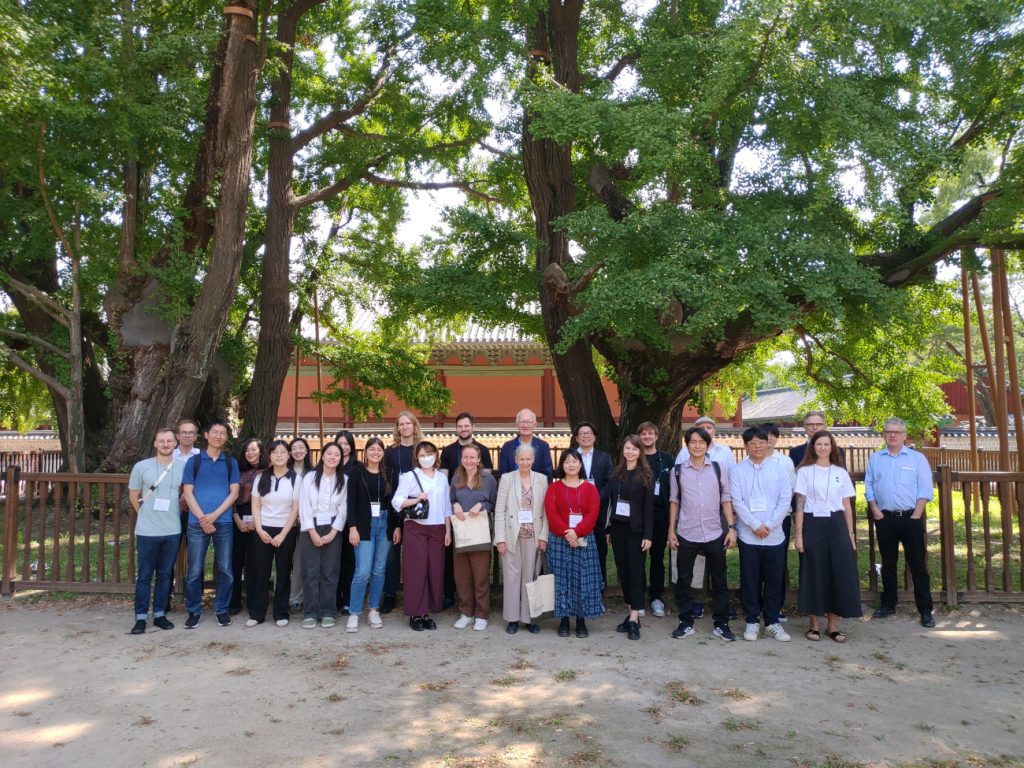
The afternoon panel was comprised of the Sungkyunkwan postdocs and doctoral researchers, beginning with RYU Sunhee, who had spent a year in Bochum and had already made RTG doctoral researchers’ acquaintance there. She was followed by research professor Dr. KIM Kang-eun and doctoral researcher KUM Bo Hyun presenting their research.
On September 15, the programme began with two panels. The first, chaired by Professor HWANG Ho-duk, featured RTG professors Marion EGGERT, Felix SIEGMUND, and Christian SCHWERMANN. The second panel, chaired by Professor NOH Dae-won, a specialist in AI, digital humanities and modern and contemporary Korean literature from the Department of Korean Language and Literature, featured papers by professors Christine MOLL-MURATA and Sören URBANSKY. In the final panel, Sungkyunkwan graduate students KIM Gaeun, CHOI Yeonjin, SON Ji-yoon, and ZHOU Ruixin presented papers on Korean media, prose, lyrics, and manhwa, with Professor Hannes MOSLER presiding over the panel as chair. Both days’ panels were followed by discussions that demonstrated the curiosity and keen interest of the PhD students, postdocs and faculty in each other’s research.
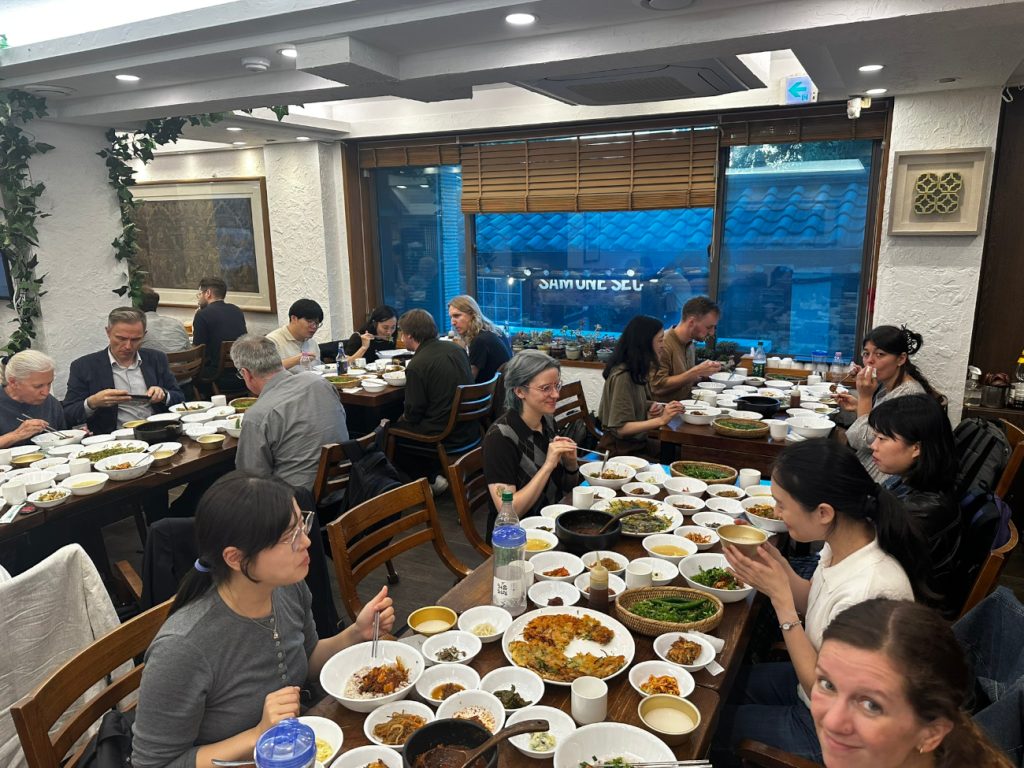
At the joint dinner afterwards, generously hosted by Professor HWANG Ho-duk, perspectives on life, literature, politics, and social issues were exchanged in a lively atmosphere.
All participants look forward to the next opportunity to meet and learn from each other. All the more so because Sungkyunkwan, the oldest Korean university, has firmly inscribed itself into the future. The university’s mottoes state this explicitly: ‘Unique Origin, Unique Future’ (독보적인 역사, 독보적인 미래) and ‘Inspiring Future, Great Challenge’.
While some participants moved to the Seoul National University campus in advance, others came directly to the venue on the morning of September 16. This time, it was the turn of RTG members specialising in the social sciences to present talks on contemporary visions of the future in East Asia and engage in discussion with faculty members and guest researchers at the Seoul National University Asia Center. The booklet of abstracts and conference programme can be found here and here.
At the venue (building 101 on the Seoul National University campus), a spacious lecture hall and a large horizontal banner had been prepared for the event, providing a formal setting for the stage. The group received a warm welcome from Professor CHAE Suhong, Director of the Asia Center. Professor CHAE outlined the centre’s vibrant activities, noting that about 300 events are organised there every year, making it a bustling place almost every working day of the year. The RTG doctoral researchers, postdocs and supervisors in the social sciences were honoured to be invited to such a renowned centre of learning at South Korea’s most prestigious comprehensive university.
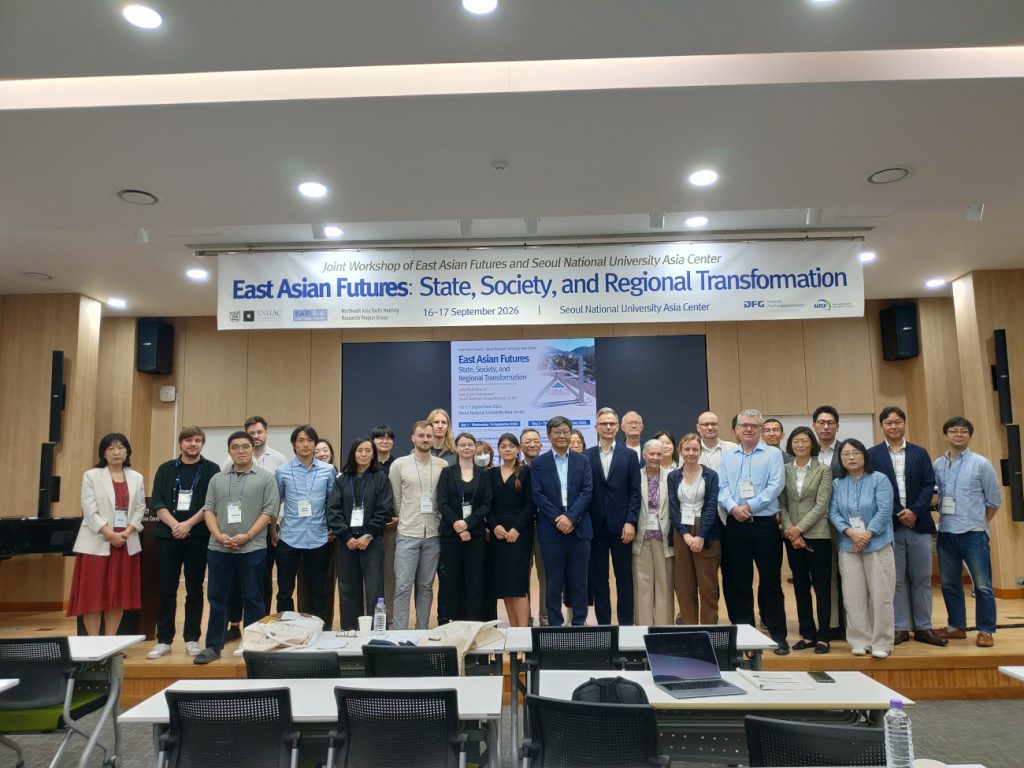
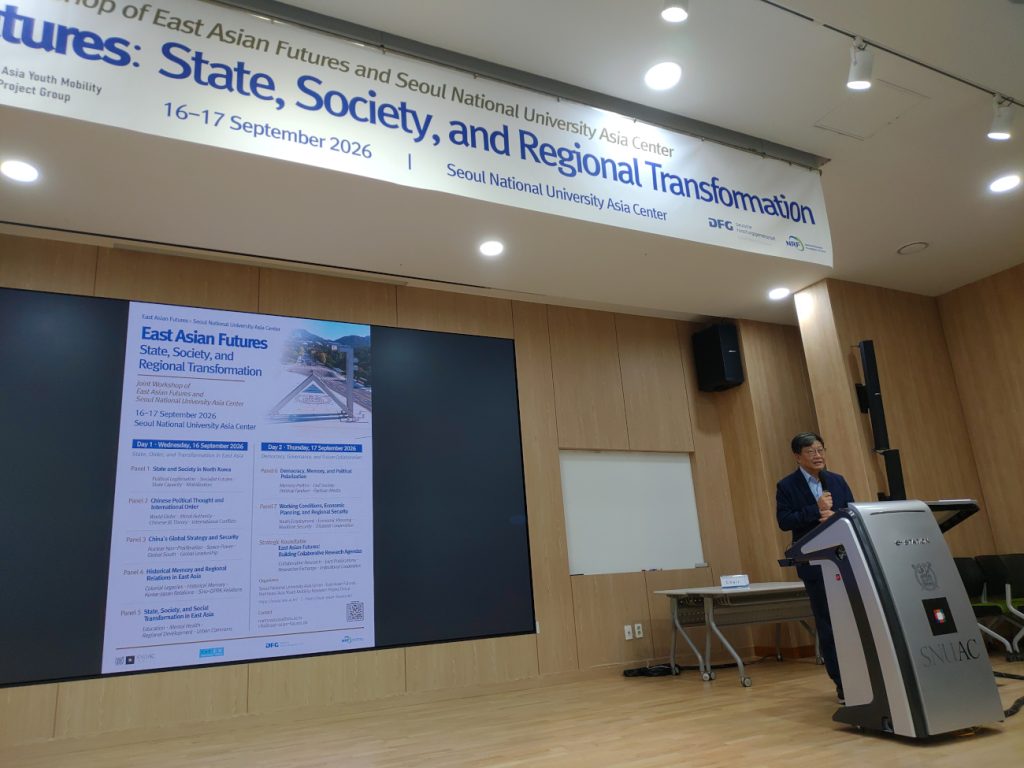
Professor KIM Baek-yung from the Department of Sociology at SNU and Director of the Northeast Asia Center at the SNU Asia Center also welcomed the RTG. Professor Christine MOLL-MURATA and Professor Hannes MOSLER from the RTG responded with thanks and appreciation. The event had been prepared and arranged by the experienced organiser Dr KIM Jong-Cheol and his team of junior researchers and students.
The programme was organised into panels comprising researchers from both SNUAC and the RTG, and the thematic alignment between the contributions was exceptionally strong. The first panel, chaired by Professor Felix SIEGMUND, was dedicated to “State, Order and Transformation in East Asia”. RTG doctoral researchers Elisabeth RACHSTEIN and Eetu LAUSTELA, as well as Dr. NOH Hyun-jong from SNUAC all presented papers on North Korea.
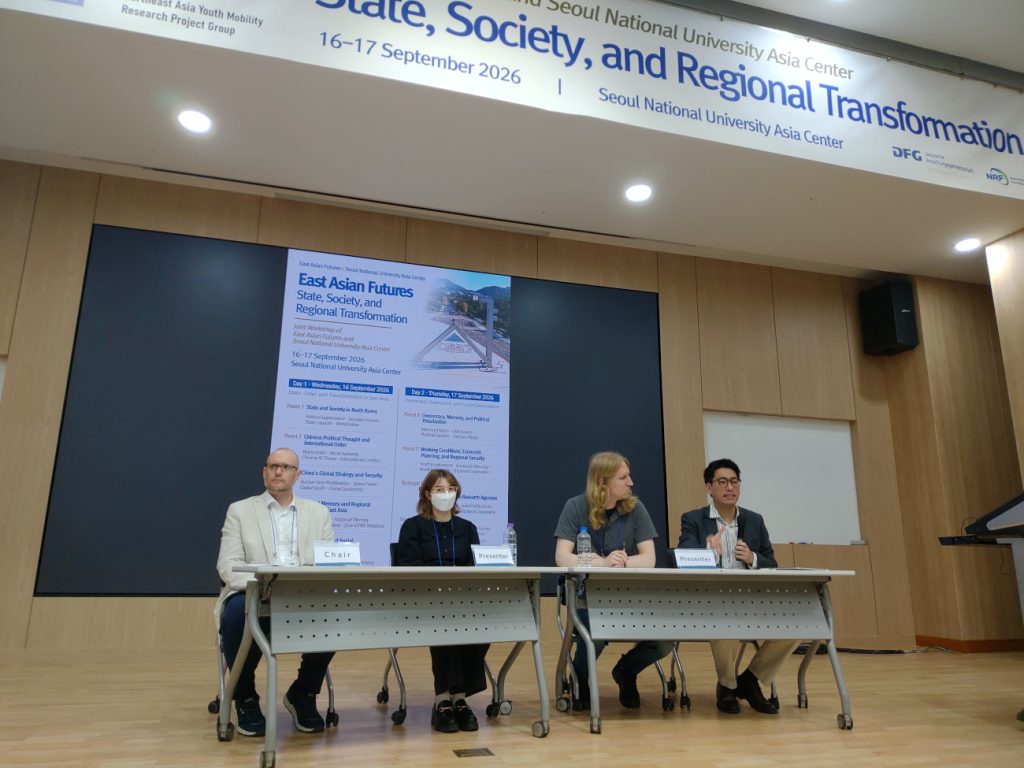
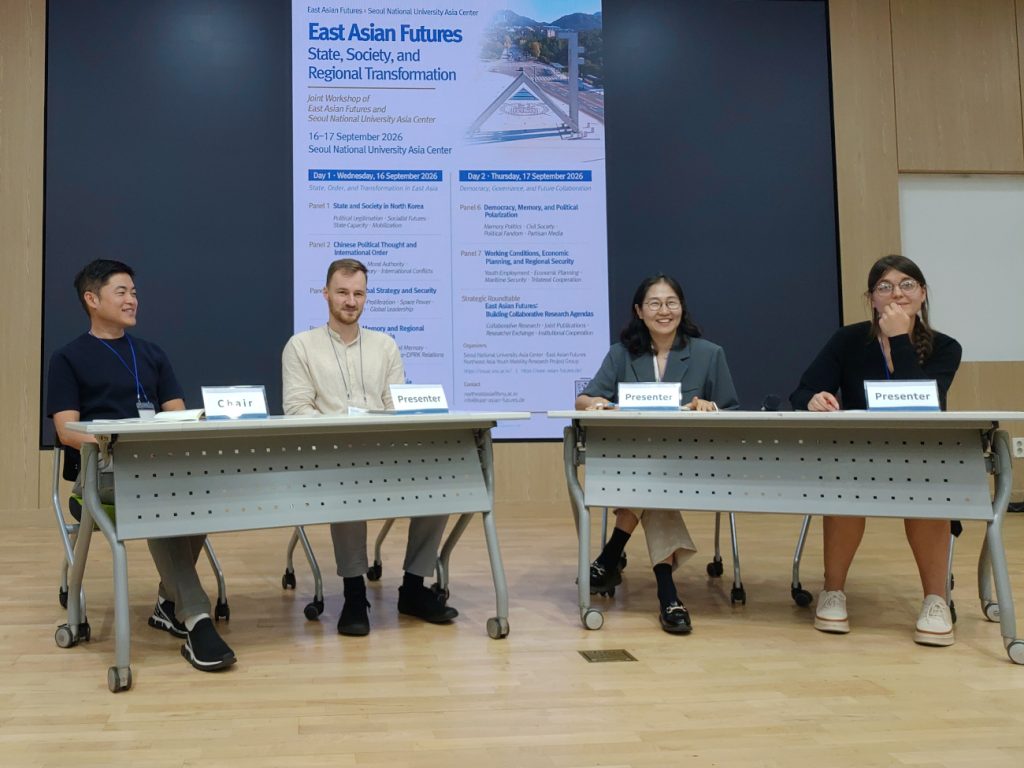
The second panel, which focused on Chinese political thought and international order, featured papers by Konrad BÖHM, Dr. SEO Jeong-kyung from the National Assembly Library of the Republic of Korea, and Liliia PEICHEVA. The panel was chaired by Dr. Pavel EM from the École des Hautes Études en Sciences Sociales in Paris.
The afternoon session continued with the third panel, chaired by Professor Hannes Mosler, which was devoted to China’s global strategy and security policy. Papers were given by Martyna SZOJA, Arne Moritz MEYER, and Professor BAIK Jiwoon from the SNU Institute of Peace and Unification Studies.
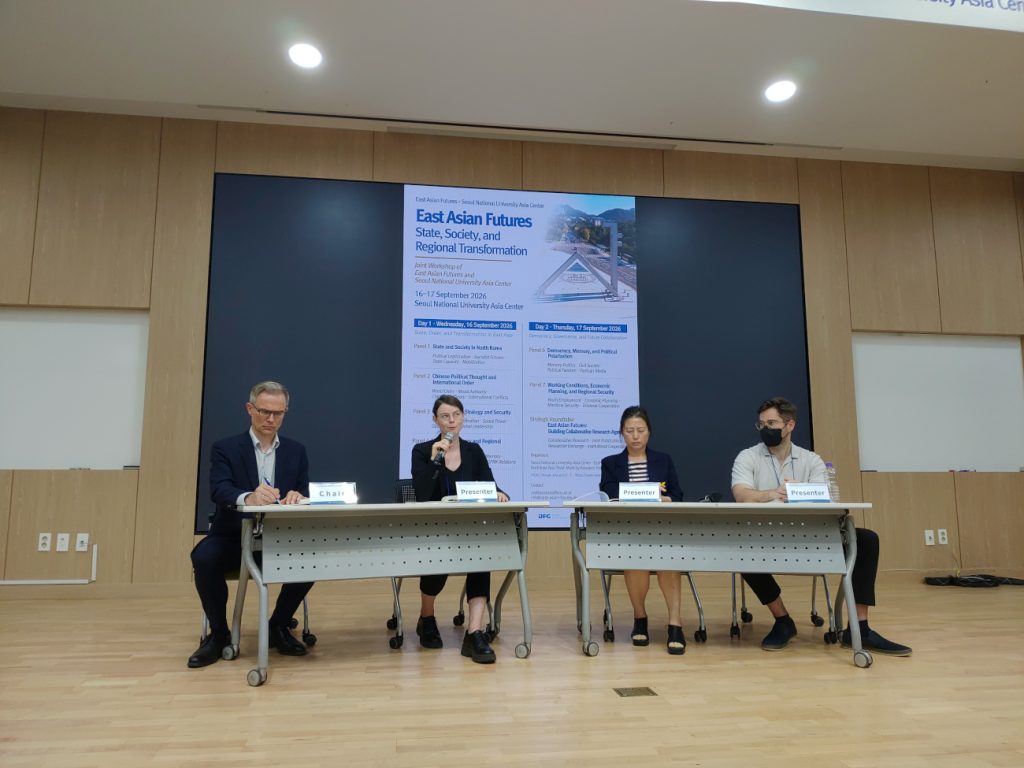
The next panel was on “Historical Memory and Regional Relations in East Asia”. PARK Minkyun, Dr. YEUNG Man Fung and Dr. NAGASAWA Yūko gave presentations on the bilateral relations between Korea and Japan, China and the DPRK, and Japan and Germany. Christine MOLL-MURATA took the chair. The final panel of the day was on the topic of “State, Society, and Social Transformation in East Asia”. Dr. NOH Hyun-jong took the chair, and the first presentation was by XIONG Xiaoyu, followed by CHI Hyunjung from SNUAC, Dr. Pavel EM from EHESS and SON Gwon from Sapienza University of Rome.
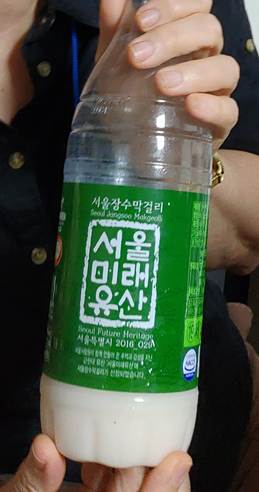
The eventful day came to a close at a traditional Korean restaurant, where Professor EGGERT spotted a “wine of the future”.
On the second day, the workshop moved to another seminar room in SNUAC’s spacious facilities. The morning commenced with a breakfast of kimbap rolls and coffee, which was greatly appreciated by the participants. It was followed by two panels featuring professors and senior faculty. Professor Marion EGGERT chaired the “Democracy, Memory, and Political Polarisation” panel. Professor Hannes MOSLER spoke on far-right memory politics in South Korea. Dr. KONG Suk-ki, a political sociologist and specialist in social movements, human rights, civil society, and social economy, then analysed South Korean experiences with fandom politics in democratic crises. The organiser of the event, Dr. KIM Jong-cheol, presented a paper co-authored with Dr. KANG Miongsei concerning voter behaviour in the 2025 presidential elections.
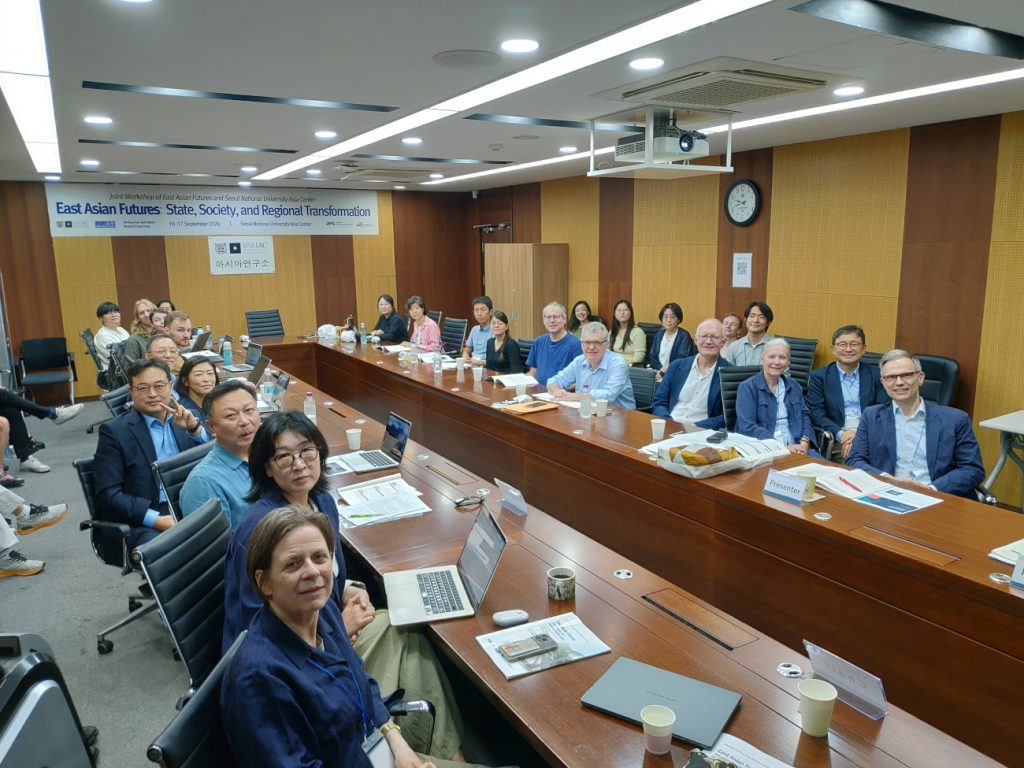
The final panel, “Working Conditions, Economic Planning and Regional Security”, was chaired by Professor KIM Baek-yung. Professor Markus TAUBE gave a paper on “Economic Planning in the PRC in the Long Term”, Dr. Monika ARNOŠTOVÁ spoke on the future prospects of educated youth in Shanghai, and Dr. PARK Ki-chul of Sookmyung Women’s University discussed US–China rivalry and East Asian maritime security.
The workshop ended with a joint discussion on prospects for cooperation which gave the RTG and the SNUAC researchers ideas for joint research, public outreach formats, and possibilities for institutionalised contacts to be pursued in the following months.
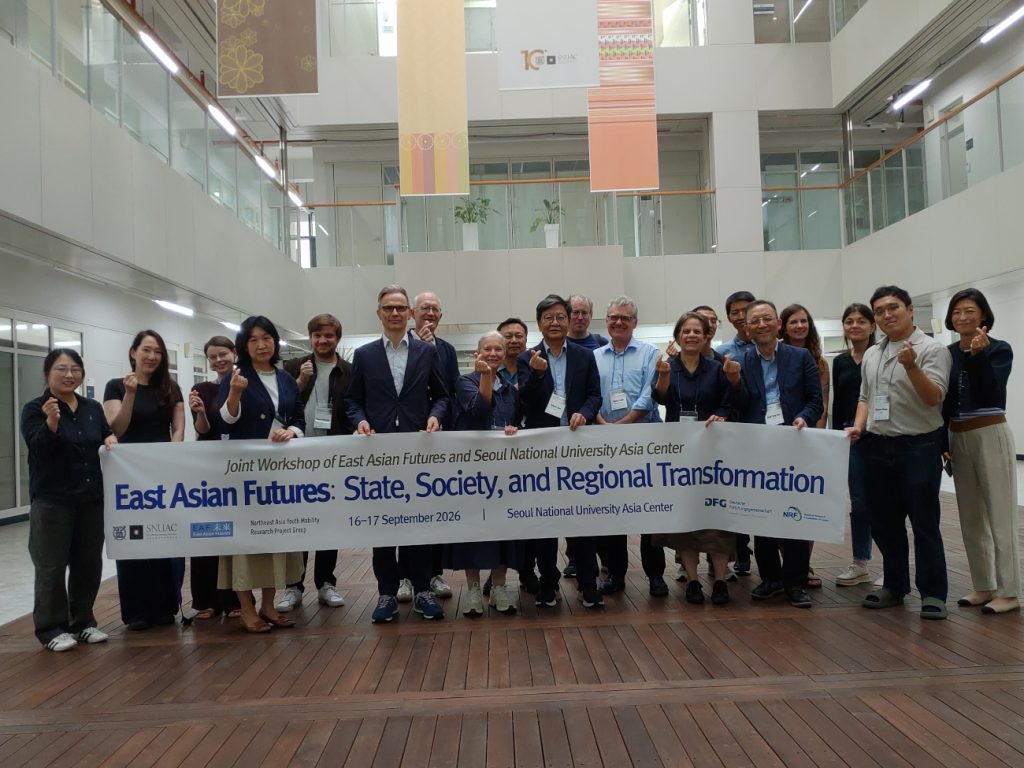
The group remained in the hospitable hall of SNUAC for a while, chatting and exchanging contact details, before parting ways. As expected, the SNU campus proved to be a fruitful place for imagining and visualising the future.
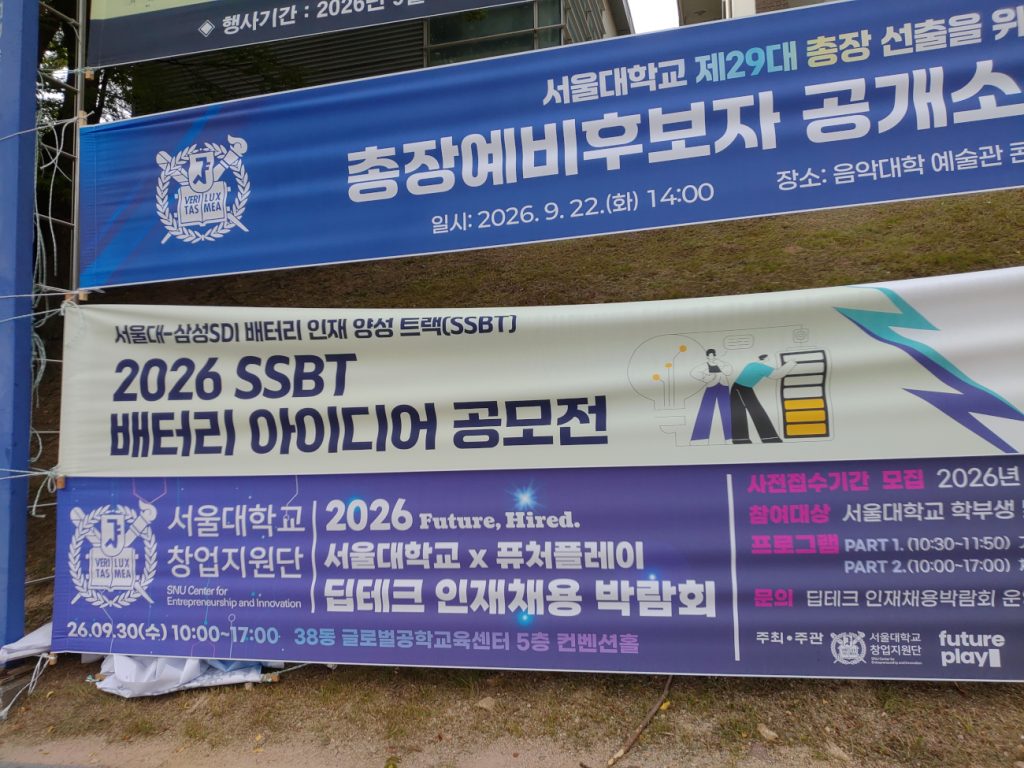
Over the course of these four days in September 2026, the second cohort of GRK 2833 “East Asian Futures” began its fieldwork in the best possible way. At Sungkyunkwan University and at the Seoul National University Asia Center, humanities and social science researchers presented their work on East Asian visions of the future and discussed it with colleagues from both partner institutions. The RTG is very grateful to its hosts, above all Professor HWANG Ho-duk and Dr. KIM Kang-eun at Sungkyunkwan, and Professor CHAE Suhong, Professor KIM Baek-yung, and Dr. KIM Jong-cheol with his team at SNUAC, for their generous hospitality and careful organisation. The ideas for joint research, public outreach formats and institutionalised contacts that emerged from the final discussion will be pursued in the coming months. Seoul has thus given the RTG both a strong start to the fieldwork phase and a promising basis for continued cooperation.